
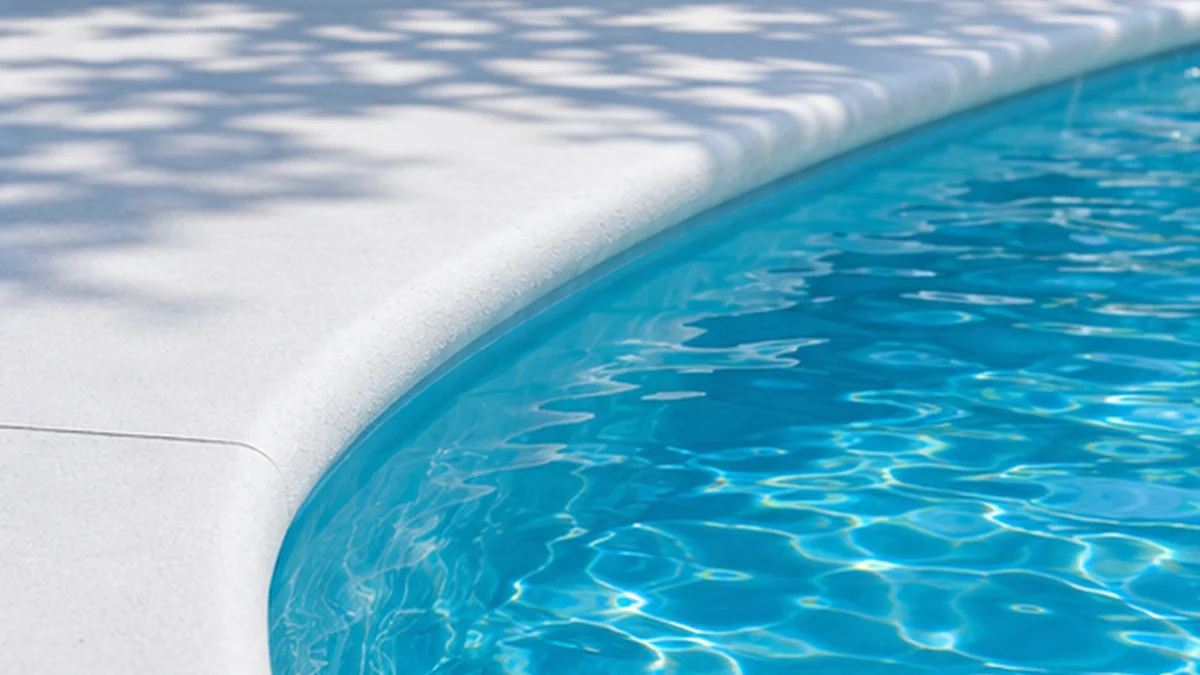
The short answer
Choose coping by testing the exact finish wet and in full sun, then checking that the product is approved for the pool edge and your climate. The coping is the cap at the pool rim, where bare feet, splash water and the joint between shell and deck all meet.
At a glance
| Material | Why choose it | What to verify |
|---|---|---|
| Travertine | Natural texture and soft color variation | Voids, edge profile, freeze-thaw suitability and salt exposure guidance |
| Limestone | Natural appearance and a range of profiles | Absorption, surface finish, salt and freeze-thaw suitability for the specific stone |
| Precast concrete | Repeatable shapes and coordinated paver systems | Color temperature in sun, texture, dimensional tolerance and sealing guidance |
| Porcelain coping | Consistent look and available factory edge pieces | Wet-barefoot use, rounded edge or pool-rated profile, attachment details and freeze-thaw suitability |
| Clay brick | Traditional look and readily defined border | Smooth versus textured finish, mortar joints, edge comfort and exterior exposure rating |
Test samples at the pool edge
Set samples side by side in the sun where the deck will receive afternoon exposure. Compare them once dry and again when wet. Check grip, heat, and how the radiused edge feels in your hand. A textured finish may be a better fit at steps where bathers enter and exit.
Where pool coping meets the deck
Ask for a section showing the coping, waterline tile and the joint where the deck meets the pool. Confirm how the installer will handle corners, tight radii and consistent overhang. Get the approved cleaner and any sealing schedule from the supplier in writing.
Price the full installed edge
Quote by the same perimeter and count corners, radius pieces, freight, setting materials and labor. Keep spare pieces from the same lot, particularly when the material has significant color variation or custom edge fabrication.
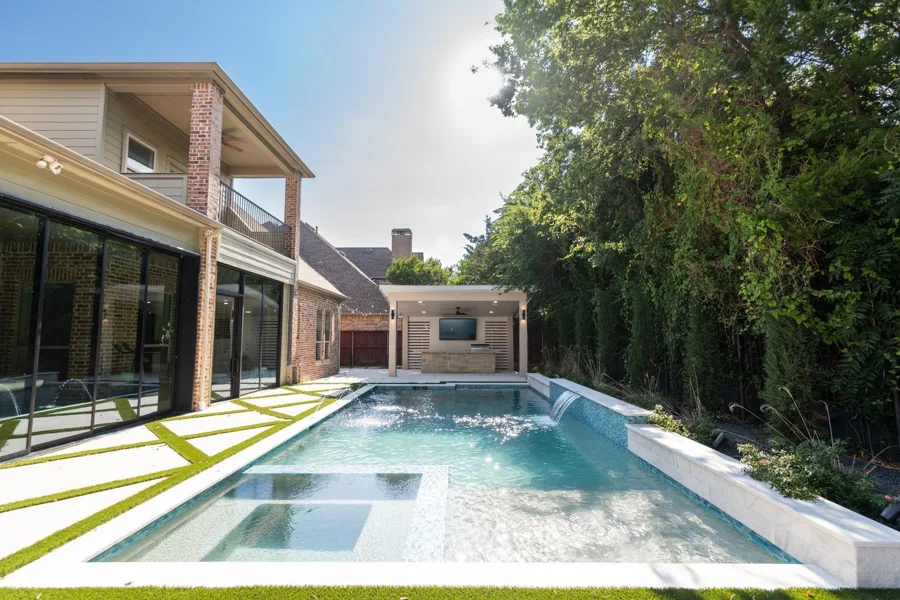
How to choose coping for heat, grip and maintenance
If the pool gets afternoon sun, sample a light-colored option in the exact texture you intend to buy. If the coping will see salt splash or seasonal freezes, ask the supplier for exposure guidance for that specific product and finish. Take a sample to the poolside with the adjacent deck and tile samples so you can assess the transition as well as the look.
- Product name, finish, thickness and edge profile
- Itemized price for corners, curved cuts and any custom pieces
- Joint detail and product-specific cleaning, sealing and exposure instructions
Common questions
Is travertine always the coolest choice?
Compare the actual samples in your site’s sun. Color, finish, exposure and shade affect barefoot comfort, even within the same material family.
What is the difference between pool coping and decking?
Coping finishes the rim of the pool shell. Decking is the walking surface beyond it. The installer should draw the transition and specify the joint between the two assemblies.
Can I use the same paver for the deck and coping?
Some systems sell matching pool-edge pieces. Use the exact profile the supplier approves for the rim, with a secure attachment detail and a comfortable edge.
Sources
Ready to plan your pool?
Start with a pool layout or see how the build comes together.
Related guides
Spray Deck vs. Pavers for Pool Decks
Compare spray-textured concrete and pool deck pavers for barefoot heat, wet grip, repairs and drainage.
Glass vs. Ceramic Pool Tile for Waterlines and Spas
Compare glass, glazed ceramic and porcelain for pool waterlines and submerged areas, and verify the full tile installation system.