

The short answer
Soil injection changes conditions in the treated ground. Helical piers transfer designed loads into suitable deeper soil with steel shafts and helices. In expansive clay, choose the approach after a site-specific geotechnical investigation and a coordinated pool structural design.
At a glance
| Decision | Soil injection | Helical piers |
|---|---|---|
| Primary function | Treat a specified soil zone using a specified method | Transfer loads through a designed connection to a qualified bearing layer |
| Proof to request | Treatment limits and depth, material and verification criteria | Pier layout, load and connection details, depth and torque records, and tests as specified |
| Movement elsewhere | Areas outside or below treatment may still move | Clay around the shell, deck and plumbing may still move |
Ask what “injection” means in the proposal
A water-only program aimed at prewetting clay differs from a lime-slurry program intended to modify eligible soils. Get the proposed material, treatment zone, expected residual movement and acceptance criteria in writing. For chemical treatment, ask how the engineer evaluated soil compatibility, including sulfates when applicable.
Ask how the pool connects to the piers
Get a coordinated drawing showing the connection between the shell or grade beams and the piers. Ask how the design handles the empty pool, groundwater uplift where applicable, and movement around adjacent deck slabs and pipes. Pier installation records should be checked against the project design and the specific pier system’s evaluation.
What a geotechnical report tells you about expansive clay
Give the geotechnical and structural engineers the pool location, proposed excavation and grades, existing fill information and drainage patterns. Ask both to align their assumptions before the excavation and structural trades quote the job.
What to ask before bidding a pool on expansive clay
Give both contractors the same pool footprint and geotechnical recommendations. The engineer should explain which parts of the project the proposed approach addresses, including the shell, deck and buried plumbing. Two bids that use different assumptions about movement or treated area can have very different scopes even if the prices look comparable.
- Geotechnical recommendations for the actual pool location
- Treatment limits and verification or pier connection details and installation records
- How adjacent decking, pipes and drainage are designed to handle differential movement
Common questions
Does every North Texas pool on clay need piers?
The soil profile, depth of seasonal moisture change, expected movement and design tolerances vary by site. Have the geotechnical engineer evaluate the specific pool footprint.
Are soil injections and helical piers interchangeable?
They have different jobs. Injection treats a specified soil zone, while a pier system transfers loads through designed connections. Ask the engineer to identify the movement and load paths each proposal addresses.
Can a house foundation report be used for a backyard pool?
Give it to the geotechnical engineer as background. Ask whether it covers the pool footprint, excavation depth and existing fill well enough to inform a pool-specific recommendation.
Sources
Ready to plan your pool?
Start with a pool layout or see how the build comes together.
Related guides

Building a Pool on a Slope: Retaining Walls and Piers
Learn where helical piers and Keystone segmental retaining walls fit into a hillside pool design, including drainage and pool surcharge.
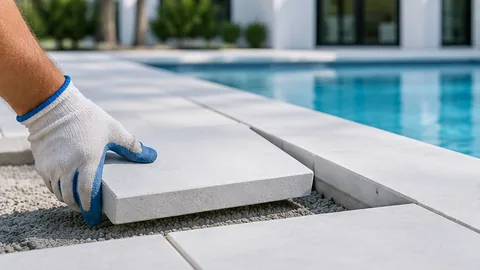
Pool Paver Base Preparation: Soil, Base and Drainage
Learn how subgrade, compacted aggregate, bedding, edge restraints and drainage work together under a pool paver deck.