
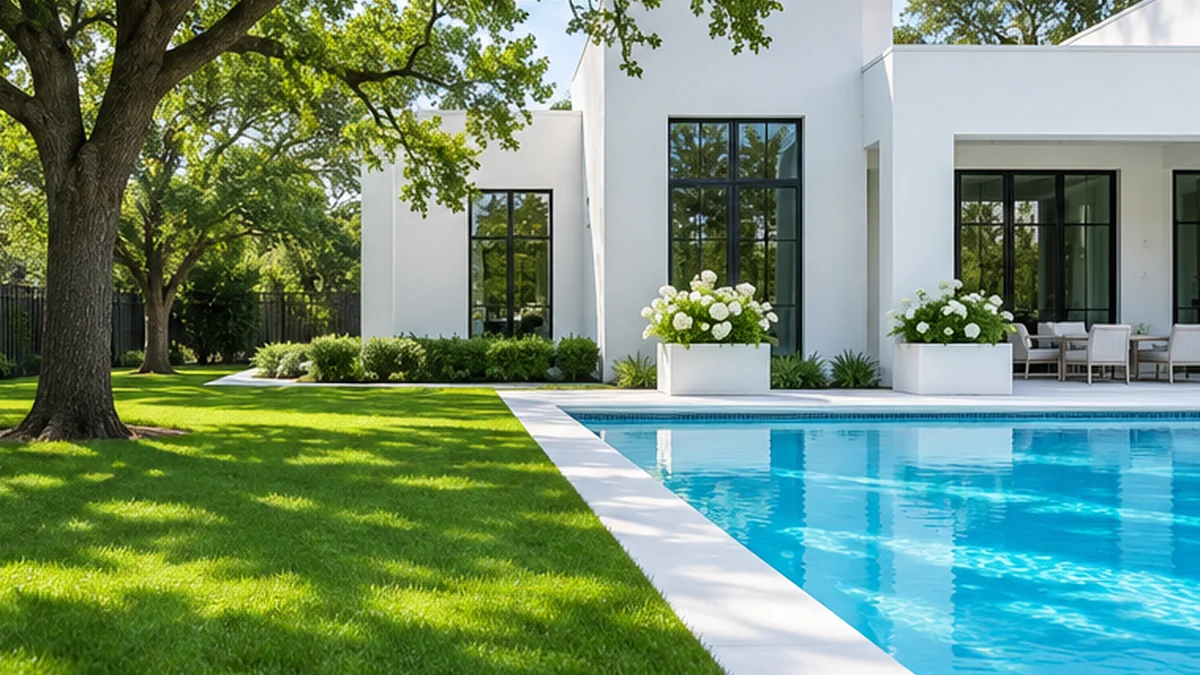
The short answer
Artificial turf avoids mowing and clippings but can become substantially hotter in direct sun. Natural grass offers a cooler sunny surface under many conditions, with upkeep that includes mowing, water and wear management. Decide where wet swimmers will walk before committing to either.
At a glance
| What to compare | Artificial turf | Natural grass |
|---|---|---|
| Full sun | Check actual surface heat in your yard | Living turf can be cooler, particularly with adequate water |
| Splash and runoff | Backing, base and outlets must allow drainage | Traffic and repeated splash can stress grass or create muddy patches |
| Upkeep | Remove debris, clean and manage seams or infill | Mow, irrigate as needed and maintain a clean edge |
Plan the wet traffic routes
Walk from planned exits to seating, the gate and the house. Consider a defined hard-surface route for the busiest path. Check how the surface and transitions will feel barefoot and whether debris or infill can wash toward the pool.
Compare the exact turf system and grass species
For artificial turf, ask about drainage, infill, cleaning, seams and UV or poolside warranty terms. For natural grass, ask a local grower or extension office about sun, shade, watering restrictions and tolerance for traffic and pool splash.
Budget the whole installation
For turf, include removal, grading, base, edging and future replacement. For grass, include irrigation changes, soil preparation, edging, mowing and seasonal repairs. Check neighboring grades so either installation can shed water without ponding beside the shell.
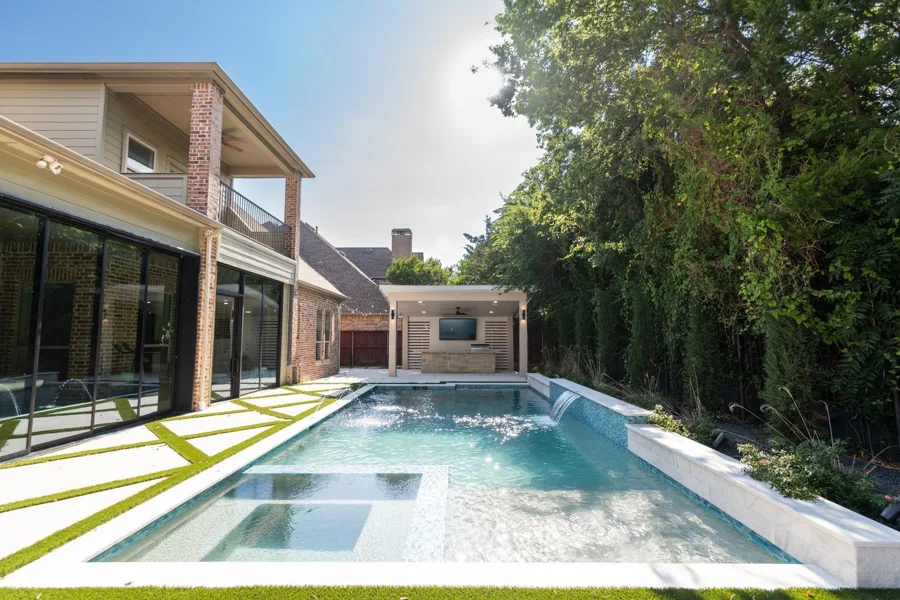
Where should grass or turf go around a pool?
Mark the route from the pool steps to the gate and house, then note where people stand and where splash collects. That gives you a practical way to compare a planted area, a turf strip and a paved route. An area that looks good in a rendering may behave differently once it becomes the main path for wet swimmers.
- Full-sun and shaded areas at your typical swim time
- Where splash, irrigation and storm runoff go
- Cleaning access, edge detail and warranty or seasonal maintenance needs
Common questions
Does all artificial turf get equally hot?
Color and the complete product assembly can change temperatures. Compare installed or representative samples at the time of day the pool will be used most.
Can you put artificial turf right up to the pool edge?
Ask the pool and turf installers to coordinate the coping joint, drainage, edging and the risk of infill or debris entering the water. Evaluate heat and footing where swimmers step out.
Will pool splash kill natural grass?
The effect depends on the grass, exposure and drainage. Ask a local grower about the specific grass and keep frequently splashed exits in mind when planning the layout.
Sources
Ready to plan your pool?
Start with a pool layout or see how the build comes together.
Related guides
Spray Deck vs. Pavers for Pool Decks
Compare spray-textured concrete and pool deck pavers for barefoot heat, wet grip, repairs and drainage.
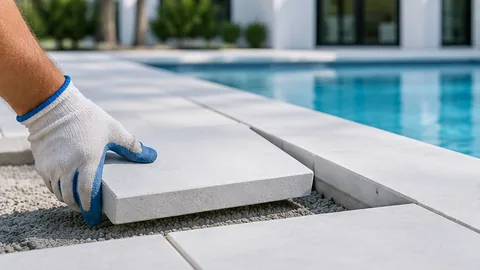
Pool Paver Base Preparation: Soil, Base and Drainage
Learn how subgrade, compacted aggregate, bedding, edge restraints and drainage work together under a pool paver deck.